With Education to Conservation
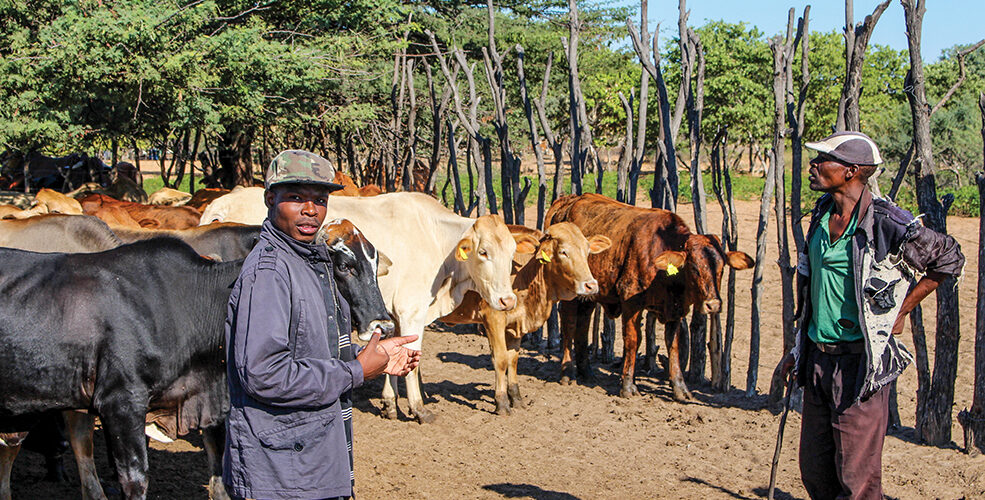
Education is a key pillar of our work. Our long-term commitment to education has built a strong foundation for promoting coexistence between people and wildlife. We focus on key areas such as livestock management, conflict monitoring, predator perception, animal welfare, and disease prevention. By providing training and practical tools, we empower farmers and herders to manage their land and animals effectively, adopt sustainable practices, and reduce conflict with wildlife. In recent years, we have expanded our efforts with several initiatives – from extended predator perception surveys and farmer workshops to regular educational lessons at cattle posts and veterinary partnerships for dog vaccination and sterilisation.
The education project, which began in 2008, now employs five people to work with the farmers and herders, as well as the residents of Kaudwane, on various projects. In addition to tangible successes coming out of this project, LEC is proud of the trust we have cultivated between ourselves and local farmers.
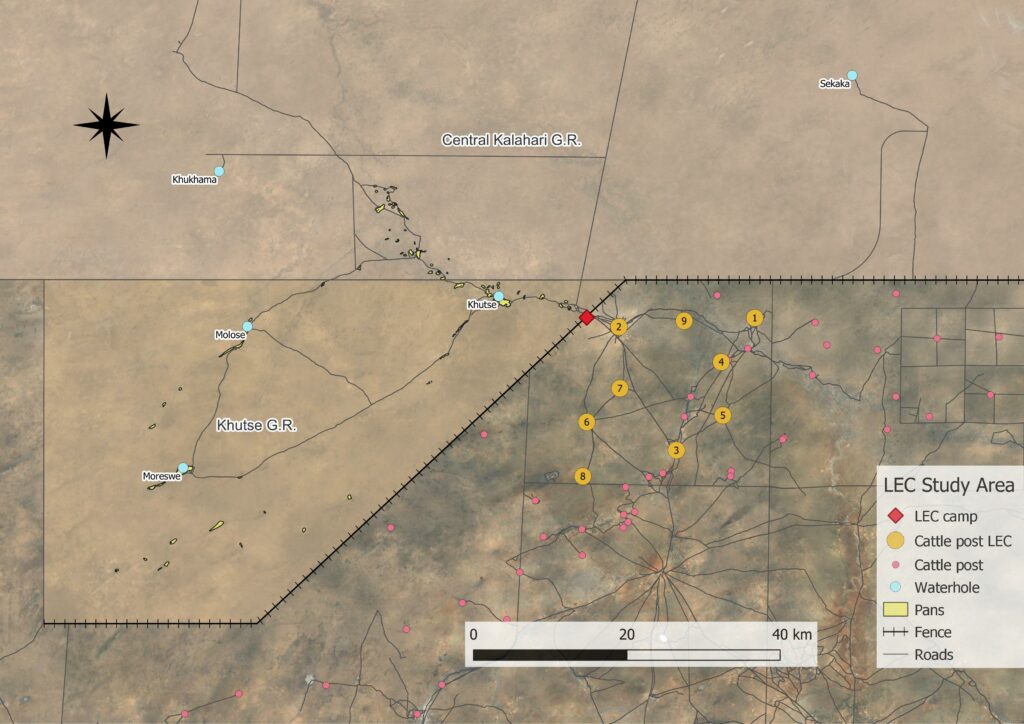
Our work radius is the Kweneng District, directly adjacent to Khutse Game Reserve. Here LEC focuses on the seven cattle posts Ditampane/Mosime, Kungwane, Mahuhumo, Makakamara, Mangadiele, Moilwane and Mokujwane and the village Kaudwane.
Specific Education Projects our Community & Education Department is engaging in
- Lessons in the Cattle Posts on disease prevention and control, feeding during dry seasons, kraal hygiene, pasture use, and simple predator‑risk reduction.
- Workshops in Cattle Posts together with local stakeholders to share knowledge and results from our research and solve challenges together.
- Hoof trimming as overgrown hooves cause pain and poor mobility, making animals easy targets for predators and lowering productivity.
- Horse evaluation as healthy horses enable better herding and timely kraaling, reducing livestock losses to predators.
- Cats and dogs sterilisation and vaccination: Vaccination lowers the risk of rabies and other diseases transmission between pets, people, and wildlife and sterilisation controls dog numbers and helps limit disease spread.
- Farmers Workshop to build capacity and alignment with the farmers.
- Human Wildlife Coexistence monitoring to track where and when livestock losses occur.
- Human Wildlife Coexistence pilot projects to test tools, methods and approaches adapted to our area that could reduce livestock losses and improve coexistence.