In the Khutse area, horses play a vital role in daily life, particularly in herding of livestock. By enabling herders round up livestock for kraaling, horses help reduce the risk of livestock straying and becoming vulnerable to predators therefore crucial in conflict mitigation. By recognising the central importance of horses to both the community livelihoods and broader conservation efforts, LEC established the Horse Health Evaluation and Assessment project.
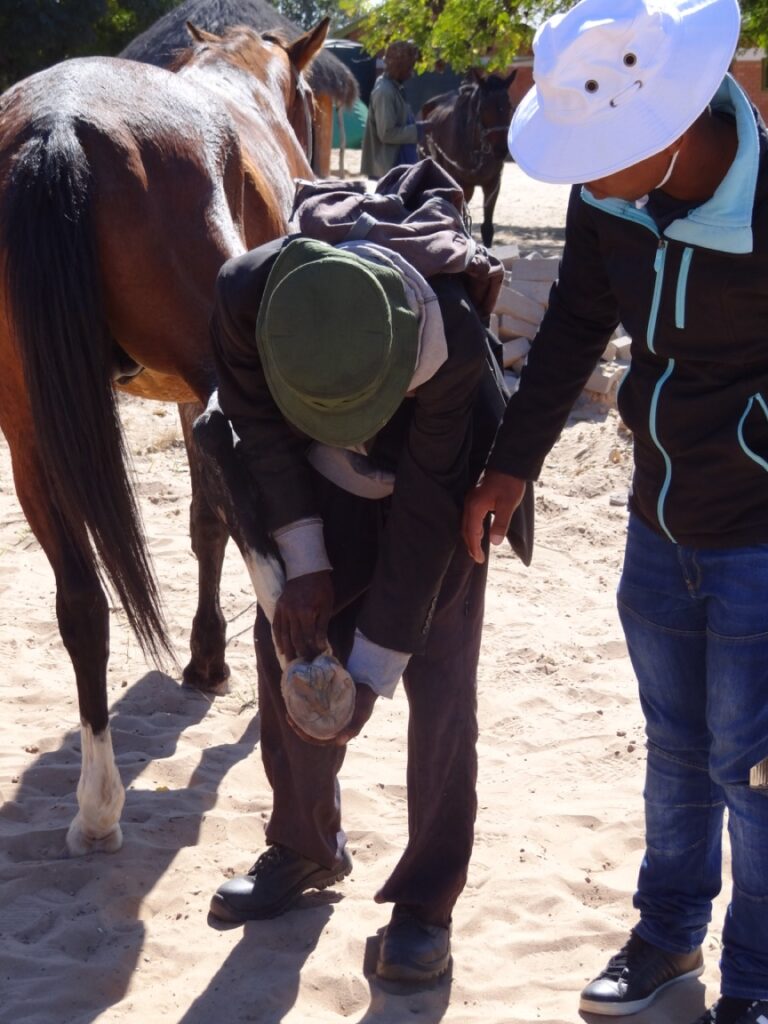
Three times a year, LEC engages the services of a professional farrier to carry out detailed assessments and provide training for horse owners. These visits go beyond routine check-ups, offering both direct veterinary-style care and hands-on education for farmers. Key activities include:
- Preventative health care: training farmers on vaccination and deworming schedules, as well as recognizing signs of illness.
- Hoof care and farrier services: thorough hoof inspections, trimming including training, and treatment of common hoof problems to prevent lameness.
- Nutrition guidance: practical advice on feeding strategies suited to the local environment, focusing on affordable and accessible solutions.
- Tack and riding instruction: demonstrations on proper saddle fitting, safe mounting, and responsible riding techniques to minimise injuries for both horse and rider.
A central goal of the project is capacity building. Rather than relying solely on external experts, farmers are taught preventative care practices they can apply independently, ensuring long-term improvements in horse welfare. To encourage commitment, LEC tracks farmer participation and progress over the year. Those who consistently demonstrate dedication to improved horse care are rewarded with practical tools such as saddles, bridles, grooming kits, and other essential equipment that further enhance their ability to manage their horses effectively.
Healthier horses are more reliable, improving herding efficiency and reducing the chances of livestock loss to predators. At the same time, improved horse welfare enhances the animals’ quality of life and longevity. Importantly, the project also contributes to conservation by strengthening human–wildlife coexistence strategies; well-managed herding reduces conflict and helps maintain a balance between community livelihoods and predator conservation.
Through this initiative, LEC not only improves animal welfare but also empowers farmers with knowledge and skills of general horse care, creating a more sustainable approach to livestock protection in the Khutse region.