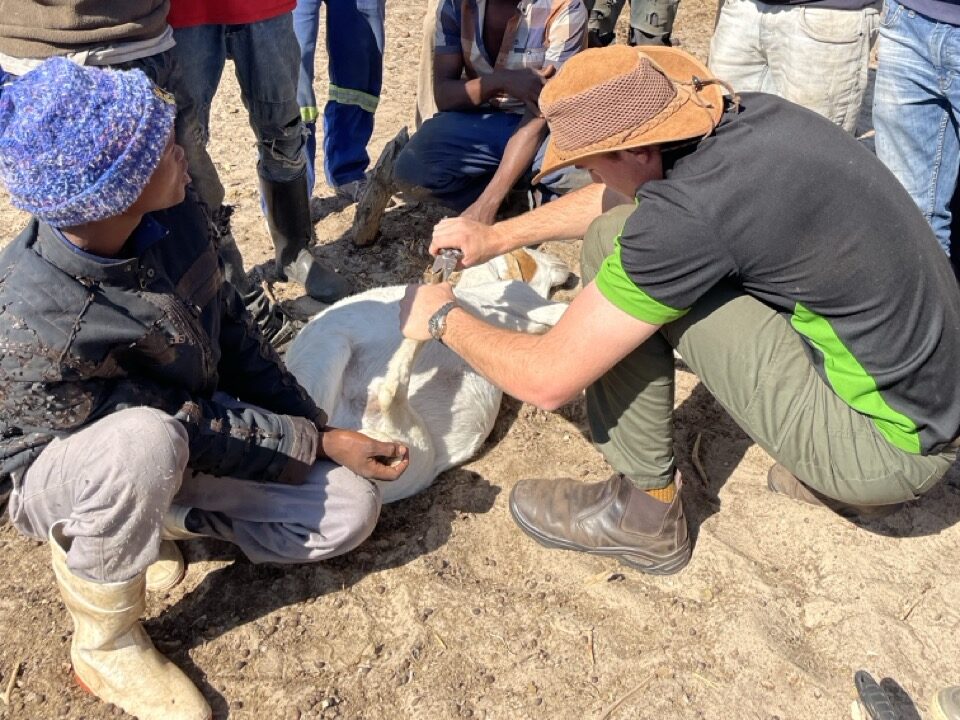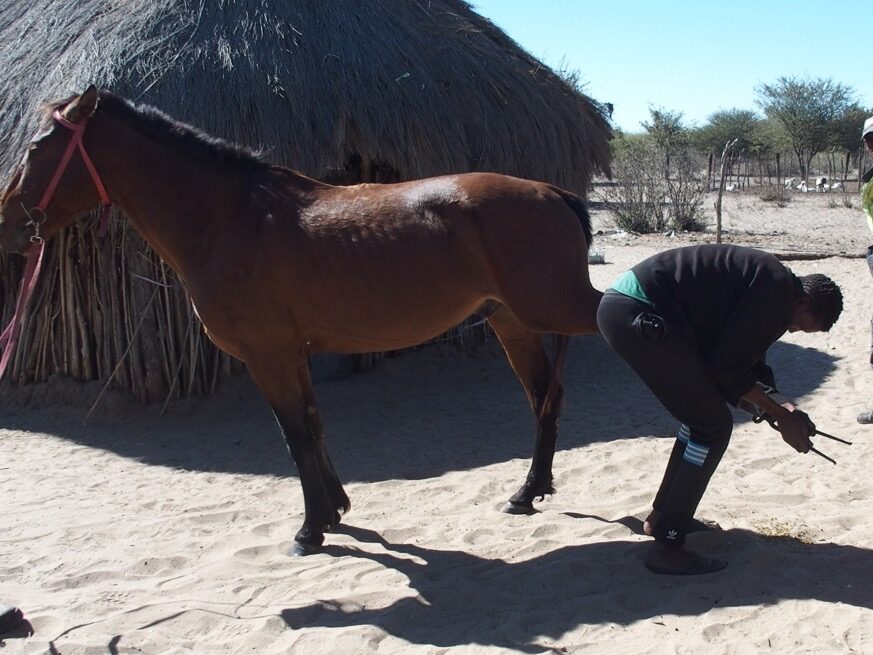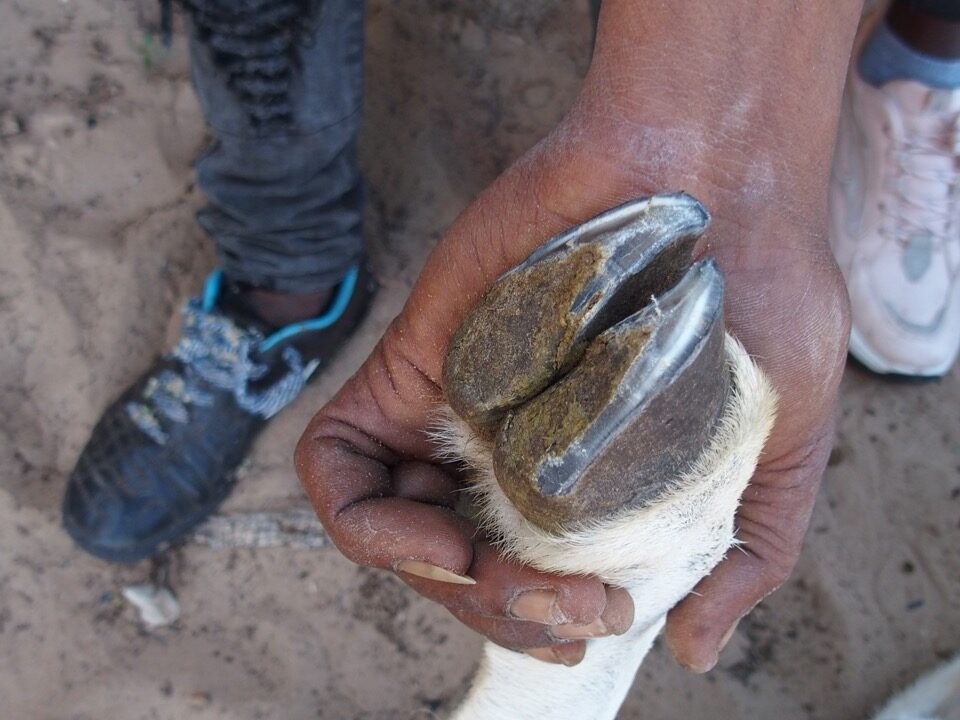
Since 2004, LEC has been working closely with livestock owners in Kaudwane and eight surrounding cattle posts to tackle the challenges caused by overgrown and neglected hooves in cattle, small stock, horses and donkeys. Hoof health is often overlooked in rural livestock management, yet it plays a crucial role in the overall well-being and productivity of animals. Overgrown hooves can restrict mobility, making it difficult for animals to access grazing and water points, which in turn increases their vulnerability to predators such as lions, wild-dogs, jackals and leopards. Moreover, poor hoof condition is directly linked to pain, lameness, and susceptibility to secondary infections, all of which reduce livestock productivity and market value.
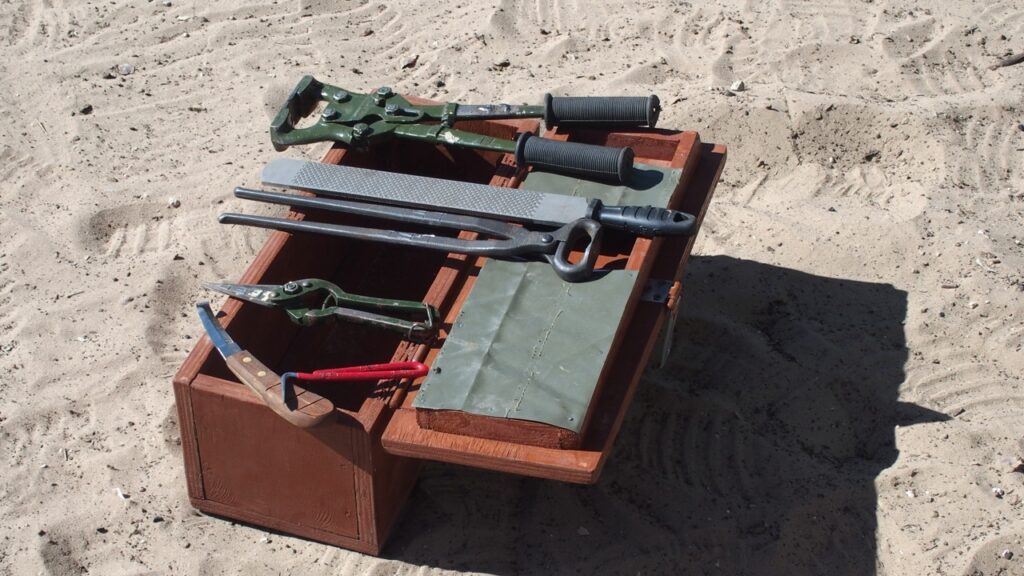
To address these challenges, LEC introduced the Hoof Trimming Project with the dual aim of improving animal health and reducing human–wildlife conflict. Each cattle post within the LEC study area has been equipped with a set of hoof trimming tools, including hoof cutters, rasps, farrier knife, hoof pick hoof nipper and a file. These tools are placed under the management of a local focal persons in each cattle post who ensure that they are accessible to farmers whenever needed. In Kaudwane village, the tools are under the custodian of the Village Development Committee (VDC), which monitors usage, ensures accountability and safe keeping.
A key element of the project is capacity building through training. Farmers are invited to participate in practical, hands-on training where they learn correct hoof trimming techniques, and safe handling of animals. The training also covers recognition of early signs of hoof diseases such as foot rot and cracks, which, if detected early, can be treated before becoming severe. By empowering farmers with knowledge and practical skills, LEC ensures that the intervention is sustainable and community-driven.
To maintain momentum and ensure the longevity of the program, LEC carries out quarterly follow-up visits. During these inspections, the team assess the condition and functionality of the hoof trimming tools, and collect valuable data on the number of animals treated. This monitoring system not only ensures accountability but also allows LEC to measure impact over time. The data collected provides insight into trends in hoof trimming tools usage, and improved animal mobility and thus improved body condition, and ultimately, higher market value at sales.